
Introduction
Pharmaceutical manufacturing requires highly controlled environments to ensure product quality, patient safety, and regulatory compliance. Even a small amount of contamination can affect the effectiveness of medicines and lead to costly production issues. This is why pharmaceutical companies invest heavily in cleanroom technology.
Among the various cleanroom solutions available today, modular cleanrooms have become one of the most preferred options due to their flexibility, faster installation, and cost-effective construction. Unlike conventional cleanrooms that require extensive civil work, modular cleanrooms are built using pre-engineered components that can be assembled quickly while maintaining strict cleanliness standards.
This guide explores modular cleanroom systems, their construction, components, benefits, applications, and the factors pharmaceutical manufacturers should consider when planning a cleanroom project.
What Is a Modular Cleanroom?
A modular cleanroom is a controlled environment constructed using prefabricated wall panels, ceilings, doors, windows, flooring systems, and HVAC components. These cleanrooms are designed to maintain specific levels of cleanliness by controlling airborne particles, temperature, humidity, and pressure.
Modular cleanrooms are engineered to comply with ISO cleanroom classifications and GMP requirements, making them ideal for pharmaceutical production facilities.
Unlike traditional construction methods, modular cleanrooms allow faster installation, easier modifications, and future expansion without major structural changes.
Why Cleanrooms Are Essential in Pharmaceutical Manufacturing
Pharmaceutical products must be manufactured under controlled conditions to prevent contamination from dust, microbes, and airborne particles.
Cleanrooms help achieve:
- Product quality consistency
- Regulatory compliance
- Contamination control
- Improved operational efficiency
- Protection of sensitive manufacturing processes
Without a properly designed cleanroom, pharmaceutical facilities may face production failures, compliance issues, and product recalls.
Key Components of a Modular Cleanroom
1. Modular Wall Panels
Wall panels form the primary enclosure of the cleanroom. They are typically manufactured using PUF-insulated panels, powder-coated steel, or specialized cleanroom materials.
2. Cleanroom Doors
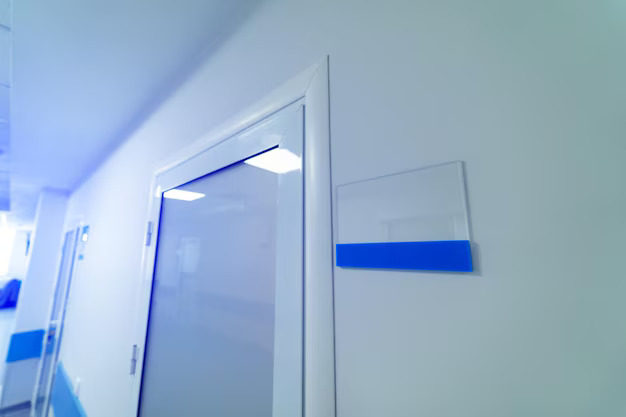
Specialized cleanroom doors maintain pressure differentials and reduce contamination risks. These doors are designed with smooth surfaces and airtight sealing systems.
3. Cleanroom Windows
Flush-mounted windows improve visibility while maintaining cleanroom integrity.
4. HVAC Systems
HVAC systems are responsible for controlling temperature, humidity, airflow, and pressure within the cleanroom.
5. HEPA Filtration
HEPA filters remove airborne particles and help maintain the required cleanliness level.
6. Epoxy Flooring
Seamless epoxy flooring prevents dust accumulation and supports contamination control.
Understanding ISO Cleanroom Classifications
Cleanrooms are classified based on the concentration of airborne particles present in the environment.
Common classifications include:
1. ISO Class 5
Used in critical pharmaceutical and sterile manufacturing applications.
2. ISO Class 6
Suitable for controlled manufacturing areas requiring high cleanliness levels.
3. ISO Class 7
Commonly used in pharmaceutical packaging and support areas.
4. ISO Class 8
Used in less critical production environments.
The appropriate classification depends on the manufacturing process and regulatory requirements.
GMP Requirements for Pharmaceutical Cleanrooms
Good Manufacturing Practices (GMP) establish guidelines for pharmaceutical production environments.
A GMP-compliant cleanroom should include:
- Controlled airflow systems
- HEPA filtration
- Pressure differential management
- Easy-to-clean surfaces
- Contamination control procedures
- Environmental monitoring systems
Modular cleanrooms can be designed to meet these requirements effectively.
Advantages of Modular Cleanrooms
1. Faster Installation
Modular systems can be installed significantly faster than traditional cleanroom construction.
2. Flexible Design
Facilities can easily expand or modify cleanroom layouts as operational requirements change.
3. Cost Efficiency
Reduced construction time and simplified installation lower overall project costs.
4. Regulatory Compliance
Modular cleanrooms can be designed to meet ISO and GMP standards.
5. Easy Maintenance
Smooth surfaces and modular construction simplify maintenance and cleaning procedures.
Applications of Modular Cleanrooms
1. Pharmaceutical Manufacturing
Used in production, packaging, and quality control areas.
2. Biotechnology Facilities
Support research, development, and manufacturing operations.
3. Medical Device Manufacturing
Protect sensitive products from contamination.
4. Research Laboratories
Provide controlled environments for scientific testing.
5. Healthcare Facilities
Used in specialized medical and surgical environments.
Factors to Consider Before Choosing a Modular Cleanroom
1. Cleanliness Requirements
Determine the required ISO classification for your application.
2. Facility Layout
Evaluate available space and workflow requirements.
3. HVAC Design
Ensure the system can maintain required environmental conditions.
4. Future Expansion
Choose a modular design that supports future growth.
5. Compliance Standards
Verify that the cleanroom design meets GMP and industry-specific regulations.
Why Modular Cleanrooms Are the Future of Pharmaceutical Facilities
As pharmaceutical manufacturing continues to evolve, facilities require flexible and scalable cleanroom solutions. Modular cleanrooms provide an ideal balance of performance, efficiency, and compliance.
Their ability to support contamination control, simplify installation, and accommodate future modifications makes them a practical solution for modern pharmaceutical operations.
Conclusion
Modular cleanrooms have become an essential part of pharmaceutical manufacturing due to their flexibility, cost-effectiveness, and ability to meet strict contamination control requirements. By integrating advanced HVAC systems, HEPA filtration, cleanroom doors, and modular construction materials, these systems help create reliable environments for pharmaceutical production.
Organizations planning new facilities or upgrades should consider modular cleanrooms as a long-term solution for achieving operational efficiency and regulatory compliance.
Contact Us
 +91 8484 836 337 | +91 7350 336 337
 sales@peterairs.com
 www.peterairs.com

