
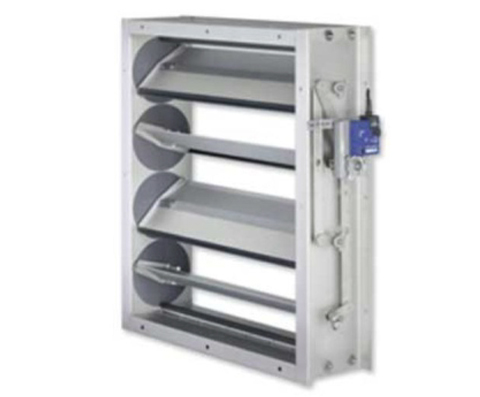
A Volume Control Damper (VCD) is an essential component used in HVAC (Heating, Ventilation, and Air Conditioning) systems to manage and control the flow of air inside ducts. It is a mechanical device fitted within the ductwork that allows users to increase, decrease, or shut off airflow to specific areas.
At Peter Air, we are a trusted manufacturer and supplier of volume control dampers in India, offering both standard and custom-built solutions for industrial and cleanroom HVAC systems.
Why is Airflow Control Important?
Air needs to be distributed properly across all sections of a building. Without controlled airflow, some spaces may become too hot or too cold, causing discomfort and energy waste. Volume control dampers allow HVAC engineers to fine-tune the airflow for uniform temperature control, reduced energy consumption, and a healthier indoor environment.
Key Benefits of Volume Control Dampers
- Better Energy Efficiency
By controlling airflow, VCDs reduce the load on HVAC units, which lowers energy usage and operating costs. - Customized Air Distribution
They allow precise air control to each zone, especially useful in large industrial plants, cleanrooms, laboratories, and offices. - Improved Air Quality
Controlling the amount of fresh and return air helps maintain proper ventilation and indoor air quality. - Flexible Design Options
At Peter Air, we manufacture round, square, rectangular, and motorized dampers for all duct sizes and system types.
Types of Volume Control Dampers We Manufacture
Manual Dampers: Simple to operate with a hand lever, ideal for fixed airflow settings.
Motorized Dampers: Automated airflow control using actuators, perfect for smart and modern HVAC systems.
Multi-blade Dampers: For better control in larger ducts.
Low Leakage Dampers: Used in cleanrooms and pharma industries for minimal air loss.
All our dampers are made from galvanized iron (GI), stainless steel (SS-304/316), or aluminum, ensuring long life and resistance to corrosion.
Manufacturing Excellence at Peter Air
Our team designs and manufactures volume control dampers at our state-of-the-art facility, focusing on quality, durability, and performance. Every product goes through strict testing for air leakage, pressure handling, and control accuracy.
We work closely with HVAC contractors, cleanroom consultants, builders, and engineers to deliver solutions that match exact project needs.
Industries We Serve
- Pharmaceutical manufacturing units
- Cleanroom and laboratory facilities
- Hospitals and diagnostic centers
- Food and beverage processing plants
- Commercial and residential HVAC projects
- Industrial ventilation systems
How to Choose the Right Volume Control Damper?
When selecting a damper, consider:
Size of the duct
Required airflow control range
Manual vs. motorized control
Operating pressure and temperature
Material selection based on environment
Our engineers are ready to assist with damper selection based on your project specifications.
Why Choose Peter Air?
Over a decade of manufacturing experience
Customized fabrication available
Delivered to leading industries across India
Expert support for installation and design
On-time delivery with quality assurance
Conclusion
A Volume Control Damper is a vital component in any HVAC system that ensures balanced air distribution, energy efficiency, and comfort. Whether you need it for a cleanroom, industrial facility, or commercial building, the right damper plays a key role in maintaining controlled airflow. At Peter Air, we manufacture high-quality, durable, and customizable dampers to meet diverse HVAC requirements across industries.
If you’re looking for reliable volume control damper manufacturers in India, Peter Air is your trusted partner. Reach out to us today for expert assistance and tailor-made solutions.
Contact Us
📞 +91 8484 836 337 | +91 7350 336 337
📧 sales@peterairs.com
🌐 www.peterairs.com

